 Deepu Asok
A few days ago I saw a Reddit comment shared by Joe Masilotti making the rounds on X. A programmer was pushing back on peers who felt uneasy about AI writing code. Were you writing your own compilers, he asked, or designing your own chips? If not, why get upset that one more layer of the job is being automated?
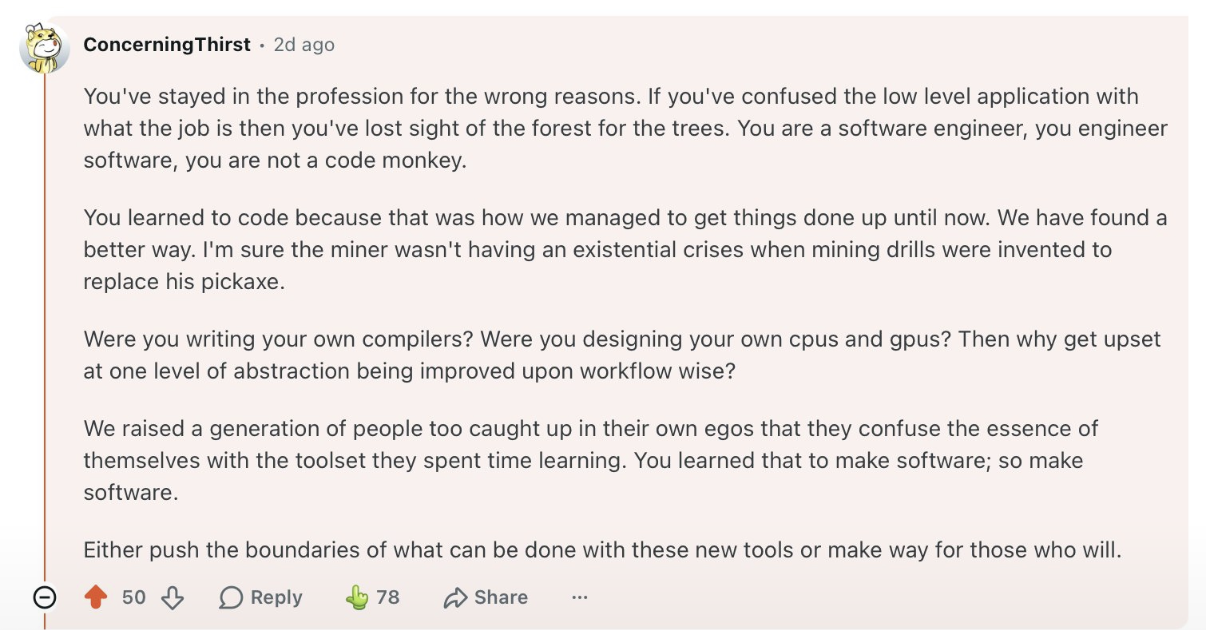
My first reaction was that AI is removing levels of abstraction. When I sat with the idea for a few minutes, I realized I had it backward. Levels of abstraction are not being removed. A new one is being added on top.
Part 1
What a level of abstraction actually is
So what is a level of abstraction? Think about making a sandwich. You could grow wheat, grind flour, and bake a loaf of bread yourself. You could buy a loaf at the store and put the sandwich together. Or you could walk into a deli and ask for a turkey sandwich.
Each step up, you say less and get the same lunch. The wheat still grew and the bread still got baked, only someone else handled it so you did not have to think about it. In simple words, a level of abstraction is a floor you can stand on without touching the work happening below you.
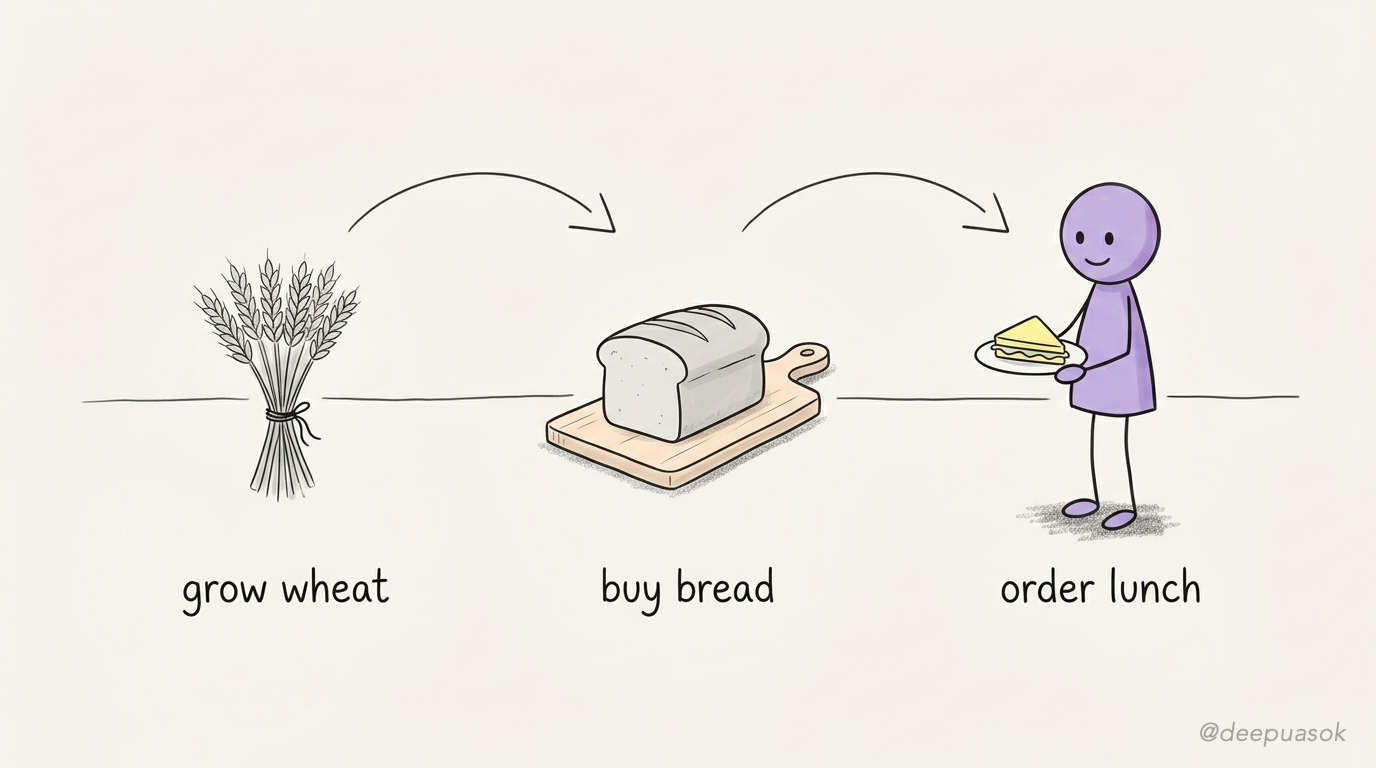
Software has been stacking floors like this for decades, moving from electronic switches to compilers to modern programming languages, and now to plain English. You can see the exact same climb in analytics. Teams used to walk step by step through data cleaning, data transformation, and business intelligence tools just to put numbers on a screen. Now you can type "build this dashboard" and watch one appear in minutes.
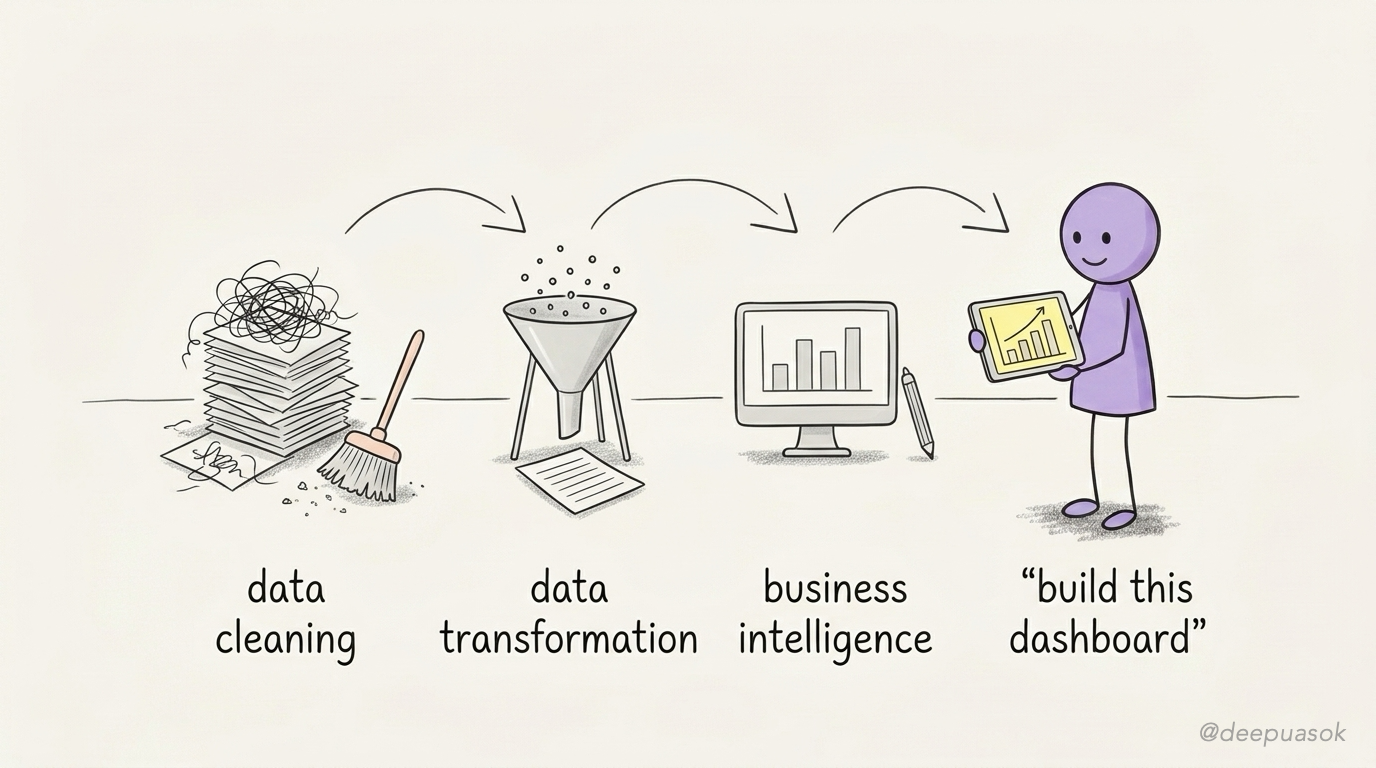
Notice what did not disappear in either picture. Nobody knocked down the lower floors. The cleaning, the transformation, and the code still run underneath. You simply stopped touching them with your own hands.
Part 2
Why the new floor wobbles
That picture sounds clean, maybe a little too clean. In 2002, Joel Spolsky wrote an essay called "The Law of Leaky Abstractions." His point is simple: every helper layer hides complexity, and sooner or later the hidden mess leaks through. Think of a car with an automatic transmission. You can drive for years without thinking about gears, until you get stuck on an icy hill and suddenly wish you understood how they work.
With AI, the leak is sharper because older layers followed fixed rules. A tested formula gives the same output every time, so you can safely ignore the machinery below. An AI tool can hand you an answer that looks finished while quietly misreading the business logic underneath.
Consider how easy it is for two reports to share the exact same label and still measure different things. Suppose both teams track sales per store per month. One report starts the clock on the day each store actually opened. The other starts the clock on the day the regional rollout began. Both columns look identical in a table, yet the second definition stretches the denominator and makes healthy stores look slow. Ask an AI to blend those tables and summarize performance, and it will happily produce a confident chart without ever noticing the mismatch.
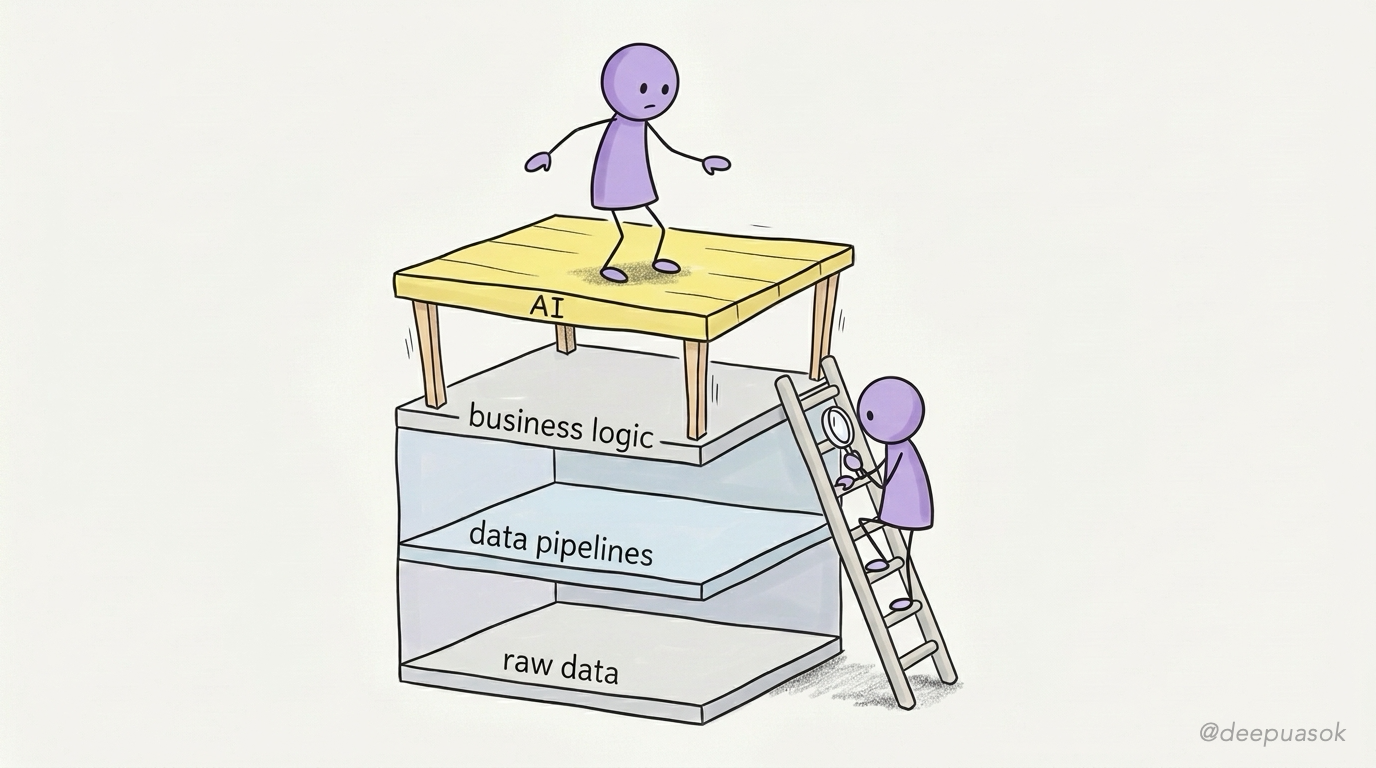
That is where the Reddit comment feels too harsh when it tells experienced practitioners to make way. When the top floor wobbles, the people who understand the underlying data and business logic are the ones who can climb down a ladder and inspect what broke. Their knowledge does not vanish. It shifts from laying bricks to checking whether the building is sound.
Part 3
The danger of a polished surface
This leakiness gets even trickier in day-to-day analytics work. You can ask an AI tool to spin up a sleek, interactive HTML dashboard in an afternoon. The layout looks crisp, the charts line up, and anyone glancing at the screen would assume the work is solid.
However, a polished front screen tells you nothing about what sits behind it. In real organizations, data pipelines fail in quiet ways that never throw an error. During an early pilot, a team stubs a few columns as blank because the source feed is not ready yet. The tests pass against those empty fields, the original builders move on, and months later the dashboard still displays clean zeros. Elsewhere, someone pulls dates from a planning system assuming they are actuals, or an incremental sync silently drops a batch of records, or a refresh job lets the newest region's numbers overwrite the previous one.
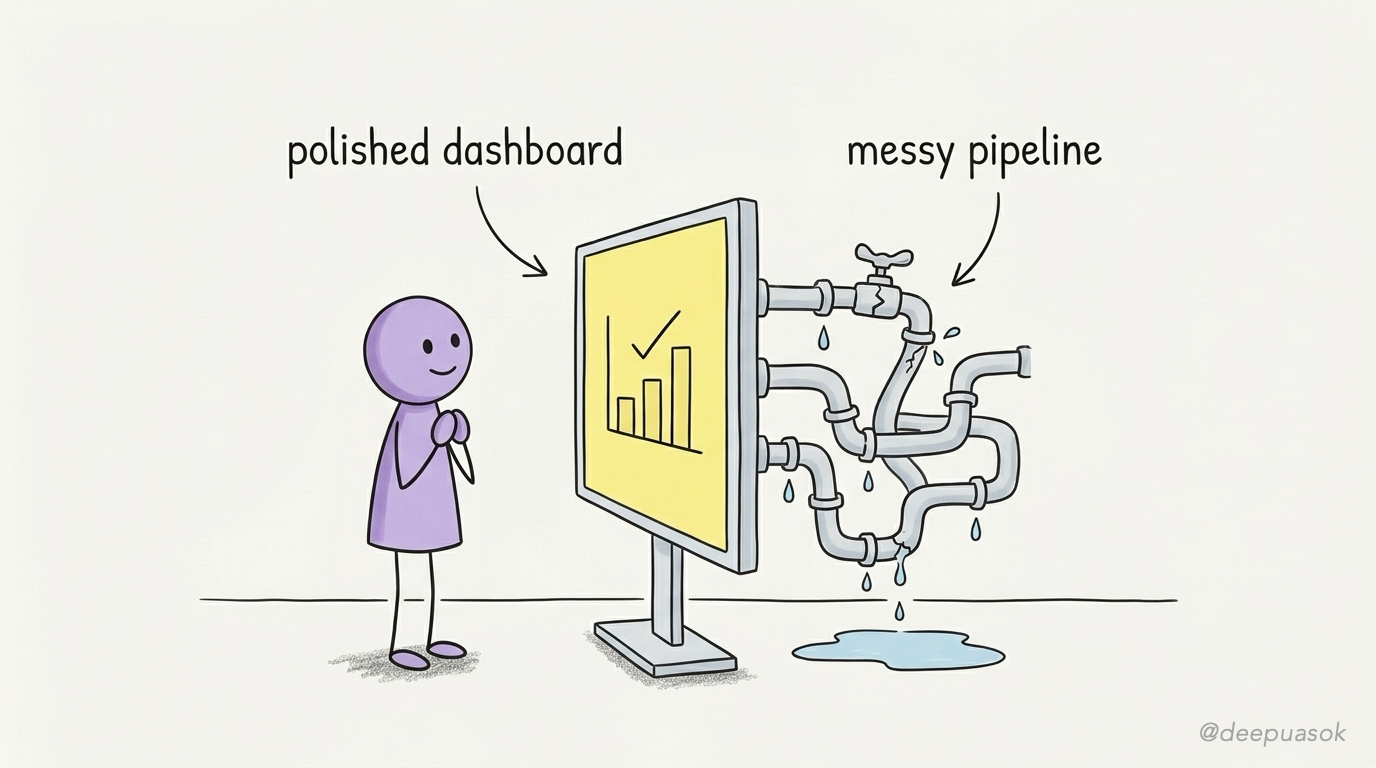
From the front screen, all four failures look identical: a neat chart with no warning lights. When a new layer of abstraction makes the front end effortless to build, more people can ship impressive outputs without knowing how to inspect the pipeline behind the wall, or even realizing there is plumbing to check. The danger is no longer that building takes too long. The danger is trusting a polished answer built on a leaking pipeline.
Part 4
Where the joy and the puzzle move
Around the same time I saw that Reddit post, I watched a short animated video called NATURAL LANGUAGE by Bennett Reloaded (which I first came across reposted on X). In it, an older programmer named Dave talks with a praying mantis about newcomers who build software just by talking to a computer. Dave makes Spolsky's argument in plain words: "They don't even know there's a down." Then he admits what really hurts. Nobody is taking programming away from him, just as nobody stopped people from making pottery by hand, only nobody needs him to do it anymore.
Compare the two sources and you can see what each gets right. The Reddit comment is sharp about confusing a tool with the job. The video is kinder and more honest about the loss of being needed.
That sent me back to a classic I have been reading, The Mythical Man-Month by Fred Brooks, published in 1975. In the first chapter, Brooks lists five reasons why programming is fun: the sheer joy of making things, making something useful for others, the puzzle of interlocking moving parts, always learning, and working in a flexible medium close to pure thought. Notice what is missing from his list. Typing code is not on it.
If you walk down Brooks's list today, four of those five joys survive, and some get stronger. The one joy that shifts is the puzzle of moving parts, because a machine can now snap many of those small parts together for you. Later in the same book, Brooks quotes the computer architect Gerrit Blaauw to separate two jobs: "Where architecture tells what happens, implementation tells how it is made to happen." Blaauw's example is a clock. The face, the hands, and the winding knob are the architecture. The gears inside the case are the implementation.
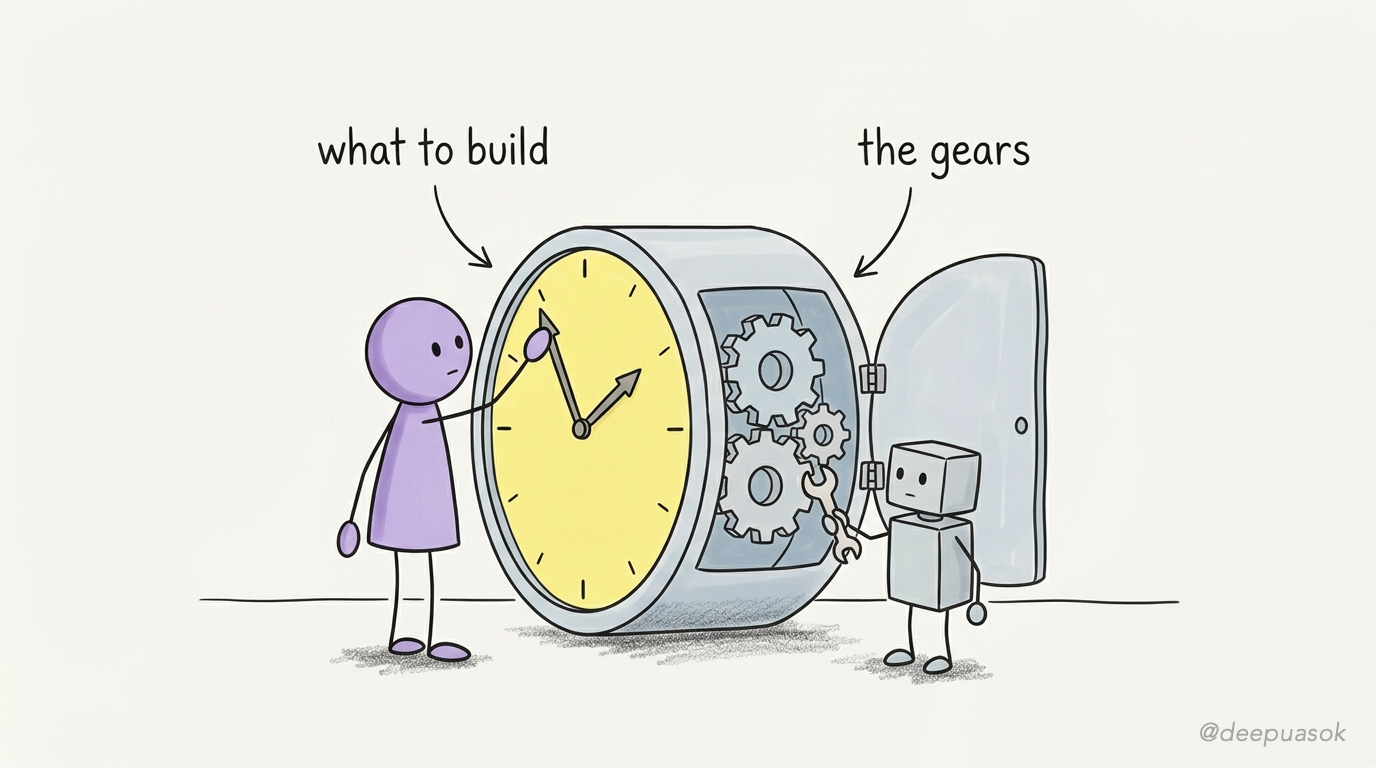
As AI takes over more of the gears, the human puzzle moves up to the clock face. Pulling numbers, formatting tables, and drawing charts are turning into gears too. The real puzzle lives before and after the dashboard: which decision is on the table, how a messy process truly works on the ground, what two similar terms actually mean (for instance, prospects nobody ever contacted versus prospects who spoke with sales and never bought, which require completely different fixes), and whether anyone will act differently once they see the answer.
However, this new puzzle feels different from the old one. Code gives you an instant click when it works. Business problems make you wait months to learn whether you were right, and the moving parts are people with budgets, habits, and bosses.
Part 5
Working on the new floor
If the floor is moving up, two habits separate useful work from shiny noise. First, spend the time you saved on the clock face: get clear on the decision, the definitions, and the messy process before asking a tool to build anything. Second, keep a way to look behind the screen. When one group treats data pipelines as routine plumbing and another assumes the front screen is clean, nobody owns the business logic in the middle until a bad decision exposes it.
New layers of abstraction do not erase the craft beneath them. They move the hardest questions one floor higher, and the people who do best are the ones who learn to work on the new floor without forgetting there is still a building underneath.
- Reddit comment by ConcerningThirst on r/SoftwareEngineerJobs, shared on X by Joe Masilotti
- NATURAL LANGUAGE, by Bennett Reloaded on YouTube (also on TikTok and reposted on X by @ashen_one)
- The Law of Leaky Abstractions, by Joel Spolsky (2002)
- The Mythical Man-Month, by Frederick P. Brooks Jr. (1975), Chapters 1 and 4 (quoting Gerrit Blaauw on architecture and implementation)